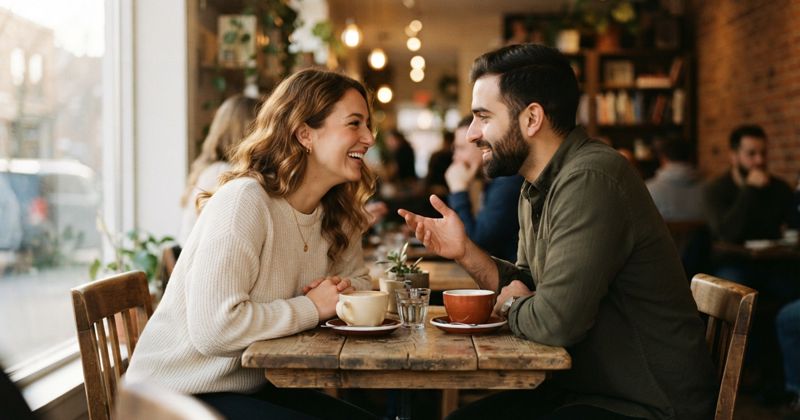
How to Plan a First Date That Feels Easy, Not Overproduced
The best first dates are low-pressure by design. Here are date formats that allow real conversation, flexibility, and a graceful exit if there's no spark.

Table of contents
A surprising amount of first-date anxiety comes from overproducing the date itself. Reservations at a loud restaurant, a packed itinerary, a high price tag — these raise the stakes for an evening whose only real job is to find out whether you enjoy talking to each other. The best first dates are low-pressure by design: easy to plan, easy to talk through, and easy to leave gracefully if there is no spark.
What a first date is actually for
A first date is not an audition or a relationship summit. Its purpose is simple — to discover, in person, whether there is enough connection and comfort to want a second one. Once you accept that modest goal, the planning gets easier. You do not need to impress with spectacle; you need a setting where two people can talk, relax, and read each other.
Overproduced dates work against this. A three-hour tasting menu locks you in for the evening whether or not the chemistry shows up. A loud bar makes conversation a chore. Activities that demand constant attention leave no room to actually connect.
The features of an easy first date
Good low-pressure dates share a few traits. Keep these in mind when choosing:
- Conversation-friendly. You can hear each other and there is no performance pressure.
- Time-flexible. It can comfortably last forty minutes or two hours depending on how it is going.
- Affordable and casual. Lower cost lowers the sense of obligation on both sides.
- A built-in graceful exit. There is a natural endpoint so neither person feels trapped.
Date formats that reliably work
Some formats hit all of those notes. Here is how the classics compare:
| Date idea | Why it works | Watch out for |
|---|---|---|
| Coffee or tea | Cheap, daytime, easy to end | Can feel too brief if it's going well — have a plan B nearby |
| A walk in a park or neighborhood | Movement eases nerves; side-by-side talking is relaxed | Check the weather and pick a safe, public route |
| Casual drink at a quiet bar | Relaxed, classic, flexible length | Keep alcohol moderate so you stay sharp |
| Visiting a market or bookshop | Built-in things to react to; no awkward staring | Keep it short and conversation-focused |
The coffee-then-walk combination is a reliable default: start with a drink, and if it is going well, suggest extending into a stroll. That lets a good date grow naturally and a flat one end after one cup.
Planning the logistics without overthinking
Pick a public, central, easy-to-reach spot. Suggest a specific day and time rather than leaving it open. Confirm the day before with a light, friendly message. Plan to arrange your own transport there and back, which keeps you in control of the evening. And give yourself permission to keep it short — a great first date is often a brief one that leaves you both wanting more.
Bottom line
You do not impress someone into liking you with an elaborate evening. You give a real connection room to appear by keeping the date simple, talkable, and flexible. Choose a low-pressure format, handle the basics with a quick confirmation, and let the conversation do the work. The easiest dates are usually the ones that lead to a second.